

婦女疑難雜症-與迷走神經發炎有關
|婦女疑難雜症系列】
在世界的舞台中心,接受世人的掌聲,光榮謝幕,其背後是多少汗水及淚水的澆灌,蘊藏無比堅忍及病痛於戰場中。
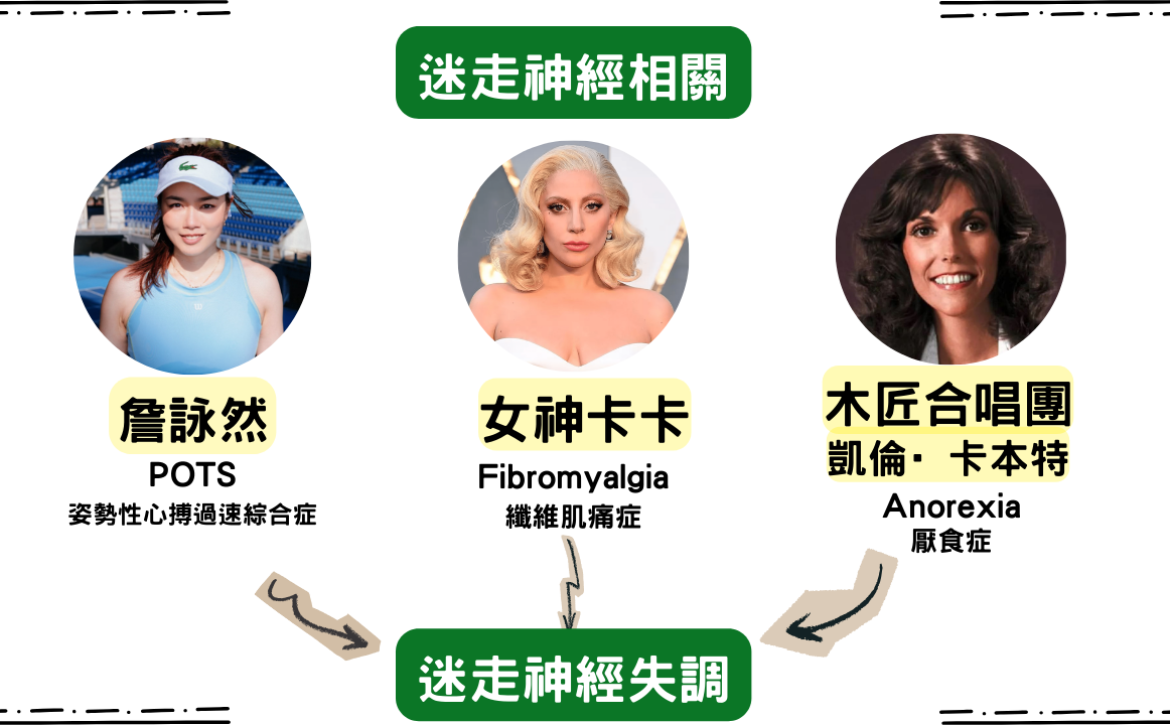
台灣網球名將詹詠然,在心跳可能隨時失控的情況下,仍站上世界舞台;木匠兄妹合唱團的 Karen Carpenter,在身體極度不適、甚至感覺不到飢餓的狀態中,仍留下溫柔動人的歌聲;而 Lady Gaga 願意公開談論纖維肌痛帶來的長期疼痛,讓更多人知道慢性疼痛並不是軟弱。這些人之所以令人敬佩,不只是因為成就,更因為他們在身體失衡的狀態下,仍努力生活、創作與前行。
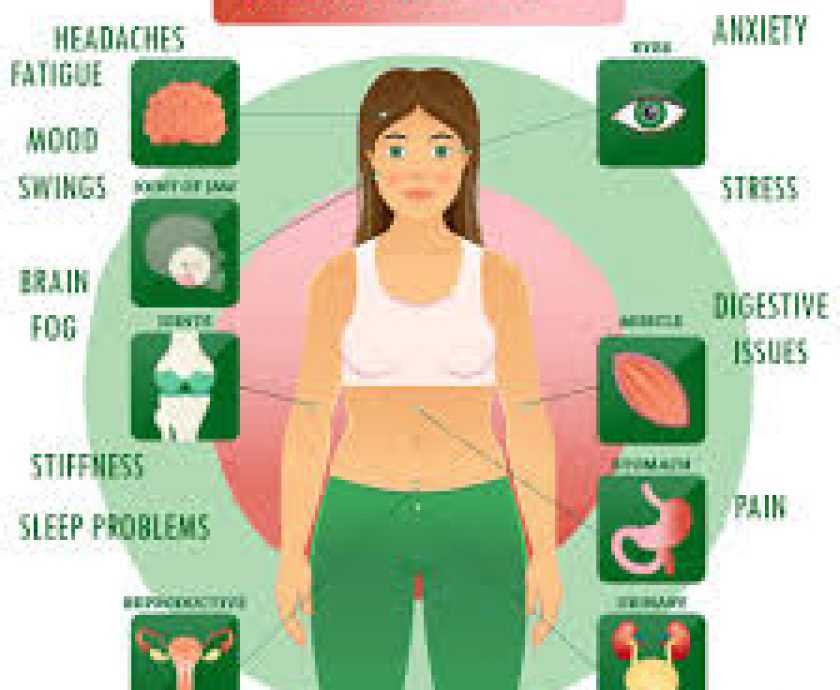
這些看似完全不同的疾病,可能共享同一條重要的神經軸線──迷走神經與腦幹,影響著心跳、食慾與疼痛調節。當這條神經調控失衡,症狀可能出現在不同器官,卻同樣難以被理解。
症狀出現的地方,不一定是疾病的源頭。
意志力值得敬佩,但疾病不該被誤會成不夠堅強。
願我們在談治療之前,先多一點理解與溫柔。
以上這些迷走神經發炎,姿勢性心搏過速,厭食症,纖維肌痛症,迷走神經的發炎經常共病外陰前庭神經炎。
[Women’s Health Issues Series]
Standing center stage in the global spotlight, receiving applause from around the world, and taking a glorious final bow—all of this is often built upon countless drops of sweat and tears, concealed perseverance, and battles with illness behind the scenes.
Taiwanese tennis star Latisha Chan (Chan Yung-jan), despite the constant risk of her heartbeat spiraling out of control, still steps onto the world stage. Karen Carpenter of the Carpenters, though suffering from extreme physical discomfort and unable to feel hunger, left behind a legacy of tender, moving songs. Lady Gaga bravely speaks publicly about the chronic pain caused by fibromyalgia, helping the world understand that persistent pain is not a sign of weakness.
These individuals are admired not just for their achievements, but for their strength in continuing to live, create, and move forward—even when their bodies are out of balance.
These seemingly unrelated conditions may share a critical neurological pathway—the vagus nerve and the brainstem—which regulate heartbeat, appetite, and pain. When this system becomes dysregulated, symptoms may appear in various organs, often making them difficult to understand or diagnose.
Where symptoms appear is not always where the illness begins.
Willpower is admirable, but illness should never be mistaken for weakness.
May we begin with more understanding and compassion before we even talk about treatment.
The conditions mentioned above—vagal nerve inflammation, postural orthostatic tachycardia syndrome (POTS), anorexia nervosa, fibromyalgia—are often interrelated. Inflammation of the vagus nerve is frequently comorbid with vestibulodynia.